About Us
Capture Today, Breathe Tomorrow. Biomass solutions for carbon storage.
Grow Green, Store Clean
We build Biomass Carbon Removal and Storage systems that restore the balance between human activity and the natural world.
The goal is a carbon-neutral economy: use biomass to capture and store carbon, cut greenhouse gas emissions, and support ecological restoration.

Nature's Answer to Carbon Capture
Our work pairs technology with natural processes: renewable energy on one side, carbon drawn out of the atmosphere on the other.
The outcome is cleaner air, healthier soil, and a carbon cycle that starts to balance out.
Our Approach
Biomass
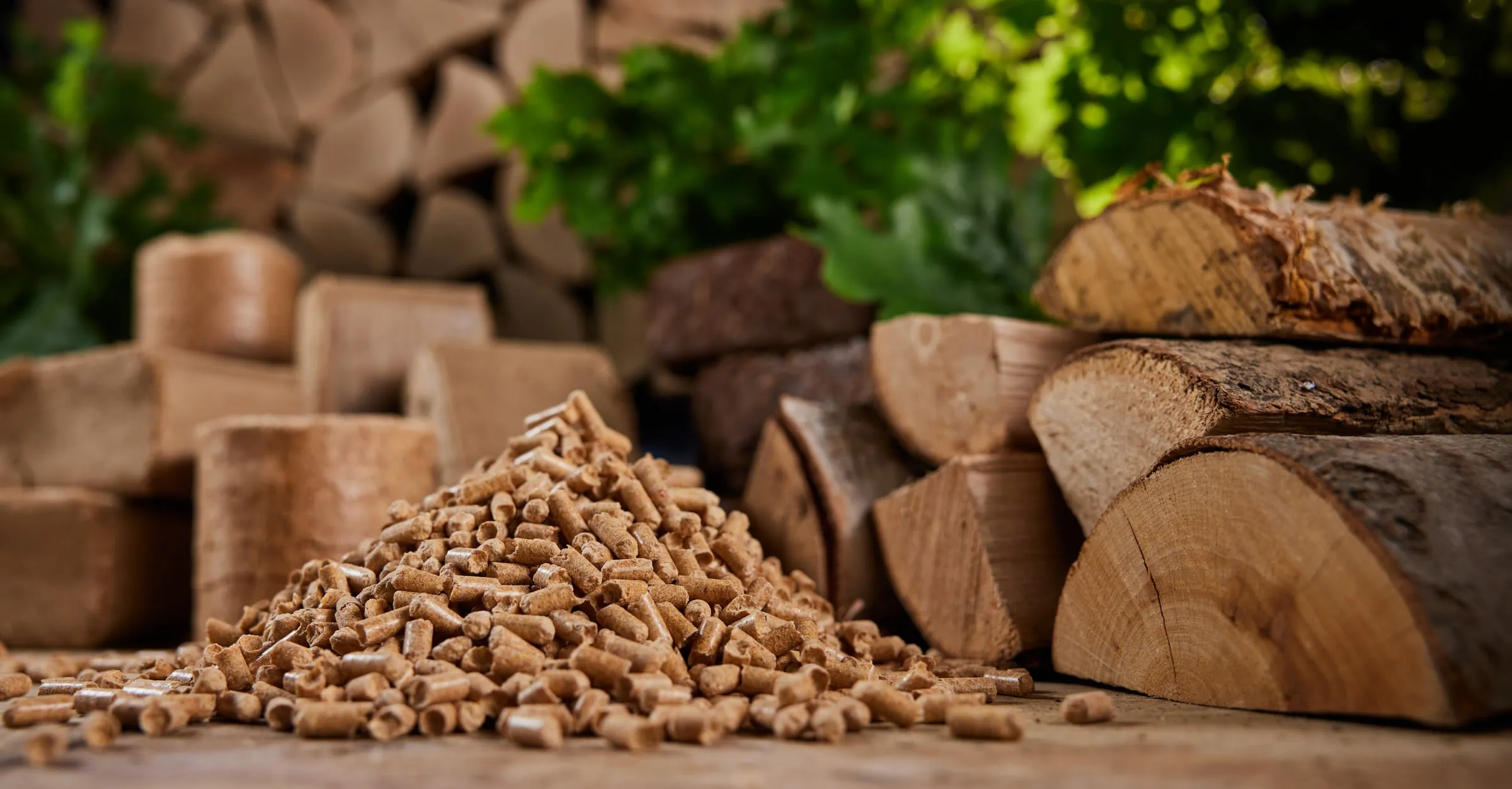
Biomass refers to organic materials (plants, agricultural residues, wood, algae) that can be used as a renewable energy source. Unlike fossil fuels, biomass is part of the Earth's natural carbon cycle: when it grows, it absorbs CO₂, and when used for energy, it releases that carbon back, creating a nearly balanced cycle.
Gasification
Biomass gasification is a thermochemical process that converts organic materials into syngas by heating biomass in a controlled environment with limited oxygen. This prevents complete combustion and instead partially oxidizes the biomass, producing a gas containing hydrogen, carbon monoxide, CO₂, methane, and nitrogen.
Syngas
The syngas produced can be used as fuel for electricity generation or as a feedstock for biofuels and chemicals. Gasification uses renewable resources efficiently and cuts greenhouse gas emissions, offering a cleaner alternative to fossil fuels.
Carbon Capturing
During gasification, CO₂ is captured and stored in biochar, which sequesters carbon for more than 1,000 years. That stable storage keeps CO₂ out of the atmosphere and makes gasification a useful lever for long-term carbon management.
Case Studies
Mobile biomass gasification systems are reshaping key industries with flexible, efficient, renewable energy.
Agriculture
Challenge
The agriculture industry generates large amounts of biomass waste from crops and livestock. Disposing of it is costly and pollutes.
Solution
Mobile biomass gasification systems convert this waste into renewable energy and biochar. Biochar enhances soil health, boosts crop yields, and sequesters carbon, while the generated energy powers agricultural operations.
Impact
Farmers cut waste disposal costs, improve soil fertility, and lower energy bills.
Forestry
Challenge
Forest residues and wood waste pose a disposal challenge and increase wildfire risks.
Solution
Mobile biomass gasification systems convert forestry waste into energy, providing a renewable power source for forest operations and nearby communities.
Impact
This approach supports sustainable forest management, reduces wildfire risks, and generates additional revenue from renewable energy production.
Waste Management
Challenge
Municipalities face the challenge of managing large volumes of organic and municipal solid waste, often ending up in landfills.
Solution
Mobile biomass gasification systems process waste on-site, converting it into energy and reducing landfill use and greenhouse gas emissions.
Impact
Waste management becomes more efficient, environmentally friendly, and cost-effective, supporting circular economy initiatives.
Energy Production
Challenge
Remote and rural areas often lack access to reliable energy sources, relying on expensive and polluting diesel generators.
Solution
Mobile biomass gasification systems provide off-grid renewable energy, using local biomass.
Impact
Communities gain access to clean, reliable energy, reducing dependence on fossil fuels and enhancing energy security.
Manufacturing
Challenge
Manufacturing plants consume large amounts of energy, contributing to high operational costs and carbon emissions.
Solution
Mobile biomass gasification systems supply on-site renewable energy and heat for industrial processes, lowering energy costs and carbon footprints.
Impact
Manufacturers cut costs, improve sustainability, and meet tightening environmental regulations.
Frequently Asked Questions
What is biomass gasification?
Biomass gasification is a thermochemical process that converts organic materials (wood, agricultural residues, energy crops) into a combustible gas mixture called syngas. The biomass is heated in a controlled environment with limited oxygen, which prevents complete combustion and instead produces syngas along with biochar as a byproduct.
What feedstocks can be used?
Our systems process wood chips, agricultural residues (straw, rice husks, cotton stalks), forest residues, food scraps, municipal organic waste, and purpose-grown energy crops like switchgrass. The material should have a moisture content of less than 20% for optimal conversion.
How does carbon capture work in your system?
During gasification, CO₂ is captured and stored in the biochar byproduct. Biochar is a stable, carbon-rich material that sequesters carbon for more than 1,000 years. This prevents the CO₂ from re-entering the atmosphere, making biomass gasification a carbon-negative process when the full lifecycle is accounted for.
What are the revenue streams from a gasification system?
There are three main revenue streams: (1) Renewable energy: sell syngas or electricity to local grids or industries. (2) Biochar: sell as a soil enhancer for agricultural use (biochar averaged $131/ton in 2023). (3) Carbon credits: generate and sell verified carbon credits through certified carbon registries.
What system sizes are available?
We offer three product lines: the Mobile Series (30 kW) for small-scale and remote operations, the Mid-Range Series (200 kW) for medium-scale manufacturing and community projects, and the High-End Series (500 kW) for large industrial operations. Multiple units can be combined to scale output further.
Are your systems certified?
Yes. Our gasifiers are CE-certified, meeting the highest standards of safety, health, and environmental protection in compliance with European regulations.
What warranty do you offer?
All systems come with a 1-year warranty. Additional maintenance packages can be booked depending on your operational needs.
How do I get a quote?
We deliver customized solutions depending on your specific needs. Reach out via the contact form or email us at sales@loopura.com and we will get back to you with a tailored proposal.